Monday, May 18, 2015
Conclusion of Political Satire: Why It Matters?
Political satire matters because it offers a sense of self-reflection as a larger society. Since satire is never directed at a specific individual, but rather an institution, group, or collective body, there is some lenience to how much criticism one should absorb. Instead, it proves to be humorous or entertaining to the audience, even if we identify with the group or organization being satirized. Yet, it isn't what nitpicks or technicalities, screw-ups or catastrophes that defines us. It is how we are able to perceive satire and reflect with our own original wit and humor that defines us. True, there is a distinction between swaying someone politically and just politically belittling someone for the sake of comic relief, however it is our civic duty to exercise our right to conform with ideas and, at the same time, become trailblazers among others. A nation, without this free thinking of collective, non-biased information is just as inhibited as one that is under a totalitarian regime

Saturday, May 16, 2015
Contemporary Political Satire: The Daily Show
Describing itself as a fake news program, The Daily Show draws its comedy and satire from recent news stories, political figures, media organizations, and often aspects of the show itself. The show typically opens with a long monologue from Jon Stewart, relating to recent headlines and frequently features exchanges with one or more of several correspondents, who adopt absurd or humorously exaggerated takes on current events against Stewart's straight man persona. The final segment is devoted to a celebrity interview, with guests ranging from actors and musicians to nonfiction authors and political figures.
Friday, May 15, 2015
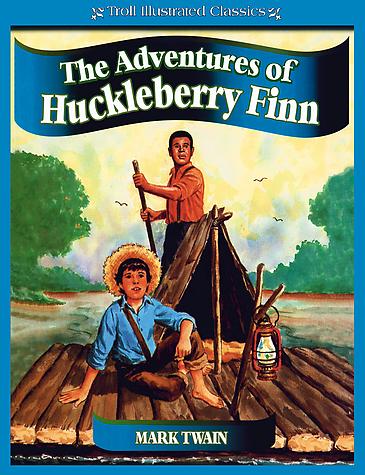
The Classical Root of Political Satire: Mark Twain
Thursday, May 14, 2015
Political Cartoons as Satire: Thomas Nast

Though Thomas Nast is credited with greatly influencing the American public during the Civil War, He is most remembered for his cartoon attack against political corruption in New York City. Nast created political cartoons in the 1870’s that exposed the corruption of Boss Tweed and New York’s corrupt Tammany Hall political machine.
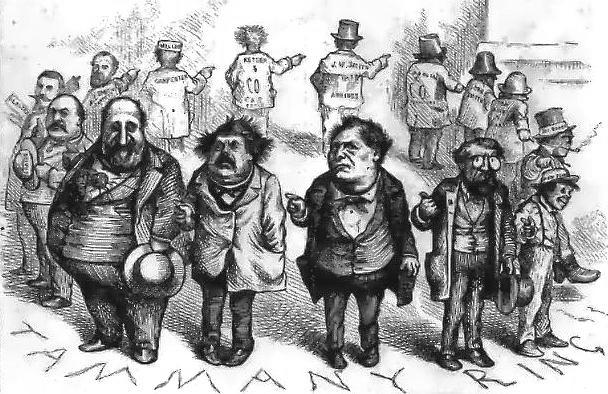
One of the cartoons printed by Nast, showed Tweed and the Tammany Hall Ring pointing at each other in answer to the question, “who stole the people’s money?” After this cartoon appeared, Tweed supposedly made the statement, “Stop them damned pictures. I don’t care what the papers write about me. My constituents can’t read. But damn it, they can see pictures.”
Wednesday, May 13, 2015
Political Cartoons as Satire: Benjamin Franklin
First Political Cartoon In America

Franklin’s cartoon depicts a snake, cut into pieces, with each piece representing one of the colonies. The cartoon was published in every newspaper in America, and had a major impact on the American conscience.
The words “Join, or Die” eluded to the Indian threat, but much of the effectiveness of this image was due to a commonly held belief at the time, that a dead snake could come back to life if the severed pieces were placed back together. Franklin’s cartoon effectively grabbed the American peoples minds, and implanted an idea that endured even though the Albany Congress turned out to be a failure.
The image of the snake became the symbol for colonial unification, and was transferred to the colonial battle flag “Don’t Tread on Me”, and became part of the American spirit.
Tuesday, May 12, 2015
Political Satire from TV News
Government Privacy and Security
Monday, May 11, 2015
Political Satire in Social Media: Twitter
Frank Conniff Tweet: https://twitter.com/frankconniff/status/597798301518405632
Andy Borowitz Tweet: https://twitter.com/borowitzreport/status/279662179299520512
Twitter has quite a way with influencing the norms of social networking in today's world. People who have a Twitter are involved in what is known as the "twitter-sphere" and contribute to flooding the Twitter newsfeed about anything imaginable, 24/7. Accounts are made with sometimes very specific agendas, in this case, both Frank Conniff and Andy Borowitz have accounts solely for the usage of political satire, with often hilarious tweets filled of the contradictory and witty remarks of the complexities in politics.
Andy Borowitz Tweet: https://twitter.com/borowitzreport/status/279662179299520512
Twitter has quite a way with influencing the norms of social networking in today's world. People who have a Twitter are involved in what is known as the "twitter-sphere" and contribute to flooding the Twitter newsfeed about anything imaginable, 24/7. Accounts are made with sometimes very specific agendas, in this case, both Frank Conniff and Andy Borowitz have accounts solely for the usage of political satire, with often hilarious tweets filled of the contradictory and witty remarks of the complexities in politics.
Sunday, May 10, 2015
Political Satire in Social Media: Vine
Vine: http://brownglucose.tumblr.com/post/113756787414/can-yall-grow-up
(Vine Posted on March 16, 2015)
Vines like these are posted on third-party social media sites: tumblr, twitter, and even Facebook for strictly humorous purposes, not as a way of instilling political agenda. However, the satire here could possibly covey how today's Executive branch is viewed as a joke, stalling legislation by vetoing bills and mismanaging the fiscal budget. It could also reference how President Obama and Vice President Joe Biden have been running the White House for two consecutive terms together, an impressive feat. The satire in the latter would then be about how "runnin' through the 6 with my woes" is how Obama, unlike the iconic rapper Drake, has a much lower approval rating than when he first ran for President. Woe(s), in this context, are people close to Obama which at this point would only be his running mate, Joe Biden.
Friday, May 8, 2015
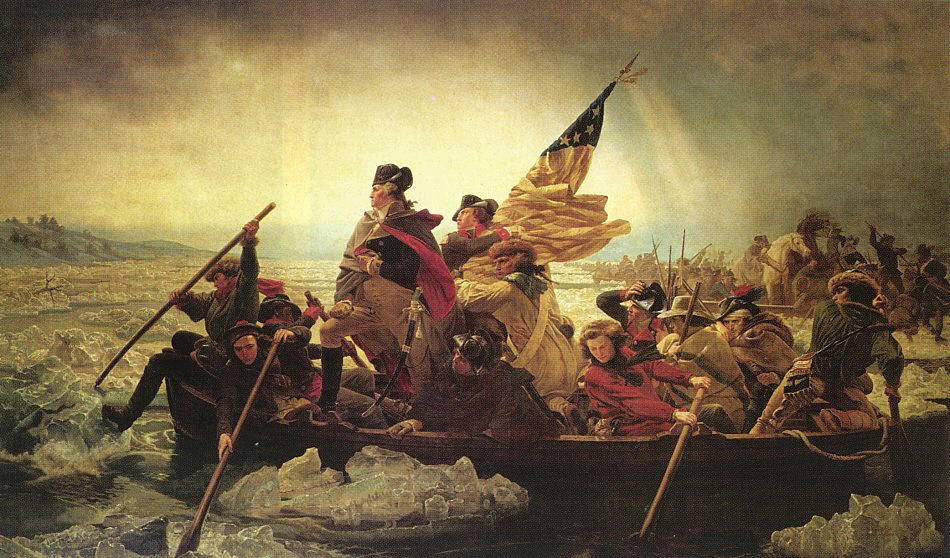
Political Satire Through the Arts: Paintings


Thursday, May 7, 2015
Political Satire Through the Arts: Posters


There are many hilarious political posters out there, especially during election season. I am personally a big fan of political posters, among all others, because you really get to see the wit that is demonstrated in multiple dimensions: words and images.
Wednesday, May 6, 2015
Political Satire Through the Arts: Music
The Lonely Island song:
Mark Russell song: http://www.markrussell.net/index.php/songs
The Lonely Island and Mark Russell are both excellent sources of music as a medium for political satire. Language, tone, cultural connotations, and recognizing your audience all become key components in this version of satire. In this Lonely Island song, the tribute to George Orwell's 1984 and mention of it being a "cautionary tale" reveal how blunt they are about satire, which only adds to the credibility in their message: people tend to take the American political conspiracies too seriously. While Mark Russell combines his piano-playing, songwriting, and harmonic vocals to skewer the Democrats, in this case, President Obama. He accomplishes this through explicit references from Obama's most recent press conferences, including a sarcastic tone of "I'm doing fine" and bashing the prolonged war with Iran by saying, "If you think I'm bluffing, ask Iran".
Tuesday, May 5, 2015
Political Satire Through the Arts: Poetry
Call Congressional
He has been our Lord and Saviour
So why from Him would we want to waiver?
Go on another path not proven or were sent
And not willing to pray or ever repent.

Often do things different then others do
And found ourselves being part of a few
People who simply will refuse to receive
Communion in Church or in God believe.

Either atheist or agnostic we appear to be
Is it God who from sin can set us free?
Can He understand ways we are thinking?
While into big hole world may be sinking.

Guns have been all hands taking their toll
Crimes are committed then things stole
We are such losers everyone can tell
Devil won't even let is come into hell.

Have you been in big battle like this before
Not allowed in heaven or hell anymore
And with ourselves being over obsessional
No wonder they call this being Congressional.

James Thomas Horn, Retired Veteran
Citation: http://www.poetrysoup.com/poem/call_congressional_660783
Basic jurisdictions of the government are being criticized for abuse of power by the government, members of Congress are satirized here for allowing this. Such topics include the separation of Church and State "Communion in Church or in God believe", with the discussion of whether atheists in a predominantly Christian nation are chastised for committing sin. Should citizens be alienated and held accountable, when in actuality, the belief is that "God [is] who can set us free"? Then the topic of gun control, taking lives of innocent citizens are outlined in the Bill of Rights--the author views this as a flaw in our society--contrary to conservative beliefs. He even ends by satirizing how the GOP are "obsessional", as they are too "buy-the-book" strict constructionists who makeup the majority of our "Congressional" during this time period.
Monday, May 4, 2015
Political Satire in Television: South Park
Conspiracy Theories
Friday, May 1, 2015
Political Satire in Television: Family Guy
Undecided Voters
In this example of political satire, undecided voters are notorious for being completely biased and uninformed in the political sphere. Seth MacFarlane, creator of Family Guy, pokes fun at these individuals who tend to become "swing votes" during an election season. He relates to how irrelevant issues such as "no taxes" and "9-11" are used to distract the party platform from real issues pertaining to the campaign.
Subscribe to:
Comments (Atom)